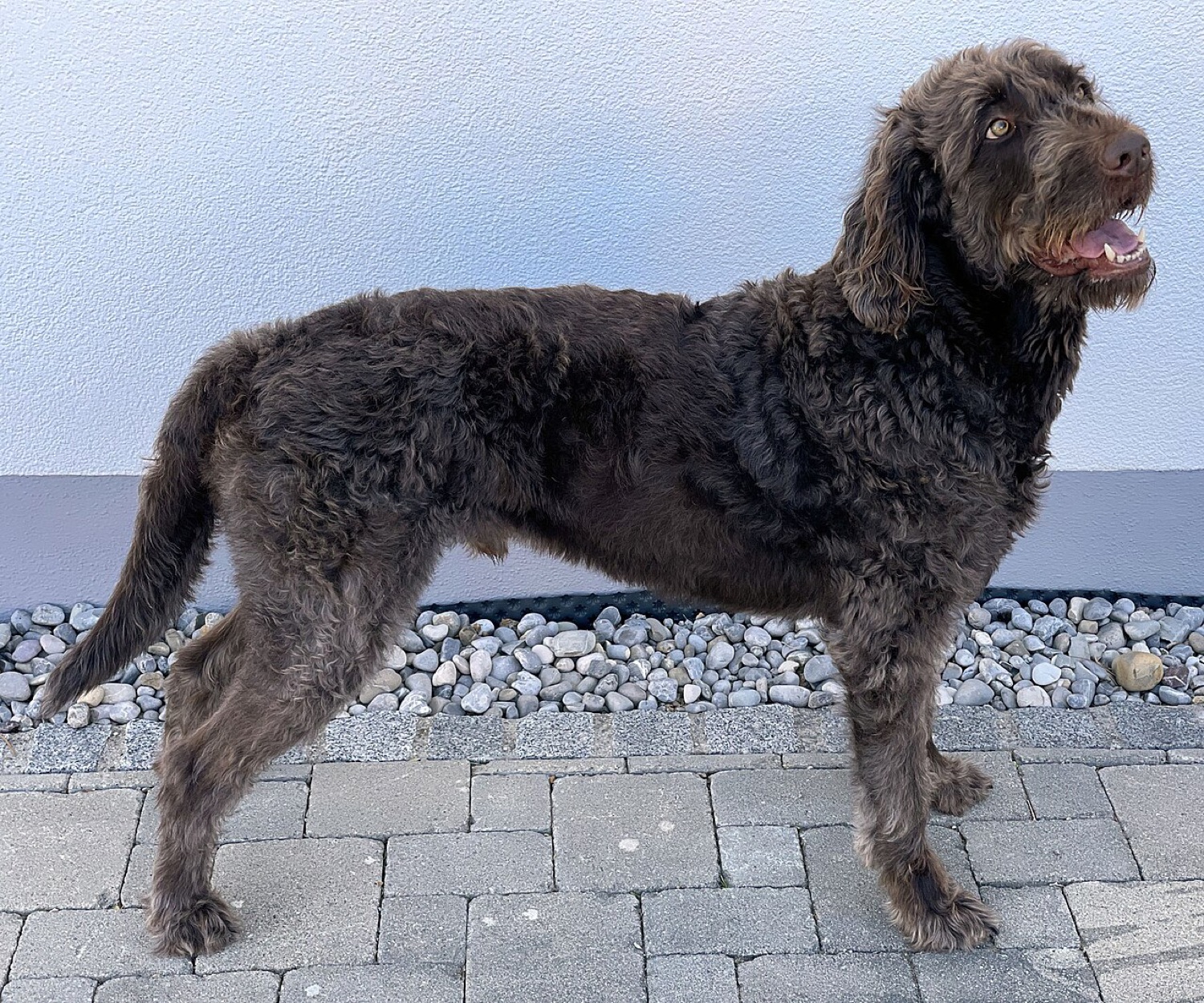
The dog that gave this domain its name was a Labradoodle, the curly cross between a Labrador Retriever and a Poodle. Few dog types have travelled so far so fast. In little more than three decades the Labradoodle went from a single experimental litter to one of the most recognisable family dogs in the world.
A request from Hawaii
The story usually starts in the late 1980s with Wally Conron, who bred dogs for the Royal Guide Dogs Association of Australia in Victoria. A visually impaired woman needed a guide dog, but her husband was allergic to dog hair. Conron crossed a Labrador with a Standard Poodle, hoping to combine the Labrador's temperament with the Poodle's low-shedding coat. One puppy from the litter, a dog named Sultan, proved suitable and went on to work as her guide.
From one litter to a fashion
The name "Labradoodle" caught on quickly, and so did the idea of a family dog that sheds less. Breeders around the world began crossing Labradors and Poodles, and later added other breeds. In Australia, some breeders developed a multi-generational type known as the Australian Labradoodle, which brought in spaniel lines among others. Conron himself later said in interviews that he regretted the craze he had started, worrying about careless breeding and health problems in poorly bred dogs.
| Coat type | Feels like | Shedding |
|---|---|---|
| Hair | Straight or wavy, Labrador-like | Most likely to shed |
| Fleece | Soft, loose waves | Usually low |
| Wool | Dense, tight curls, Poodle-like | Usually lowest, but mats easily |
The "hypoallergenic" question
No dog is truly hypoallergenic. Allergens come from saliva, skin flakes and urine as well as hair, and coats vary even within one litter. A low-shedding coat may help some allergic people, but anyone with allergies should spend time with the specific dog before committing.
What owners should know
- Energy: both parent breeds are working dogs. A Labradoodle needs daily exercise and something to think about.
- Grooming: curly coats need regular brushing and professional trims; our coat-care guide covers the details.
- Health: ask breeders for health testing of both parents, including hips, elbows and eyes.
- Size: standard, medium and miniature versions exist, depending on the Poodle used.
Choose a breeder who welcomes questions and shows you the parents, or consider a rescue: plenty of doodles end up in shelters when owners underestimate the work involved.
Quick answers
Major kennel clubs generally treat it as a cross rather than a recognised breed, though breeder associations keep their own standards.
Some do. Coat type varies even within one litter, so shedding cannot be guaranteed either way.