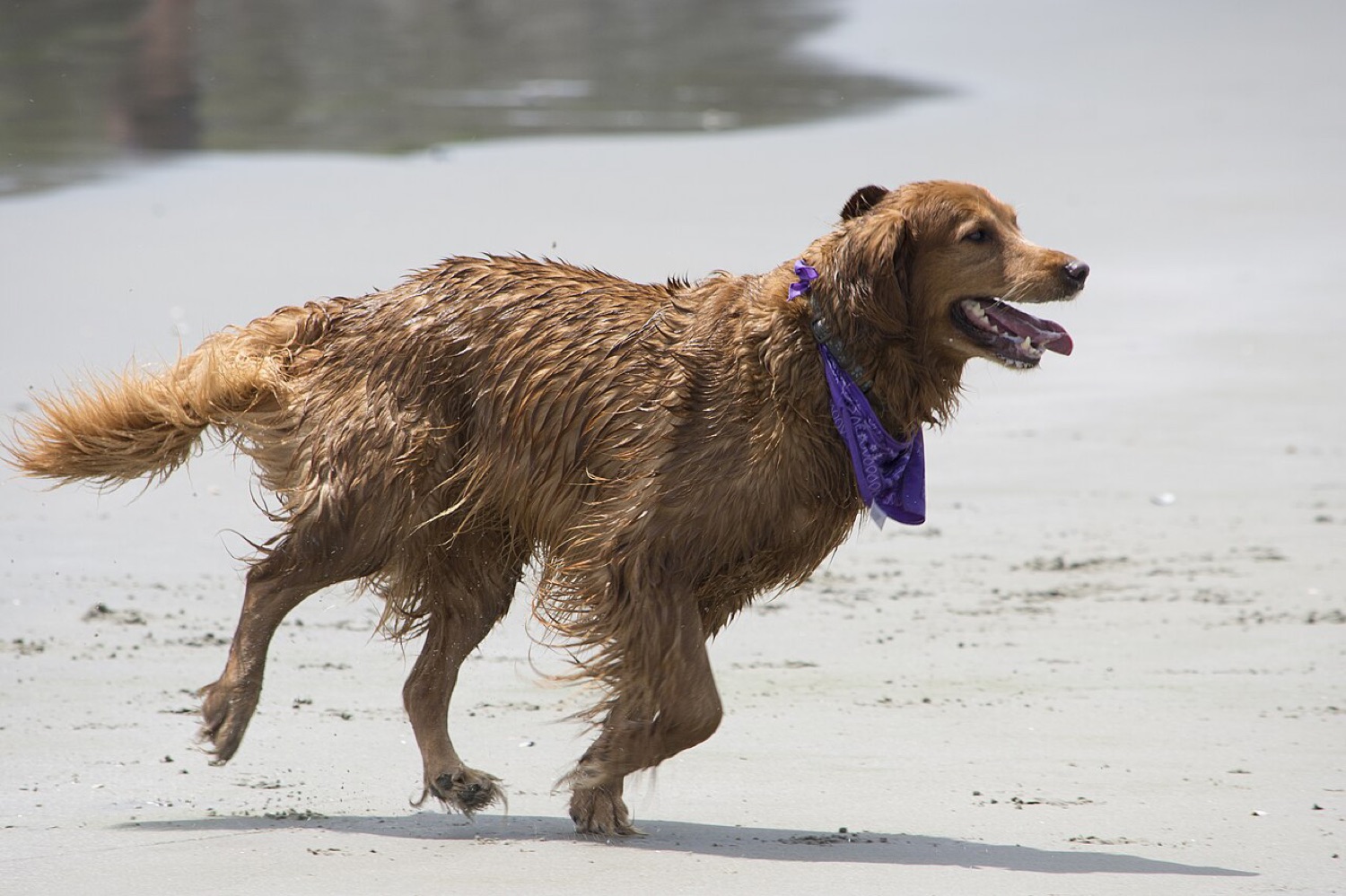
A dog on a beach, running at the edge of the waves, is about as close to pure joy as a photograph gets. Getting that day right takes a little planning. Here is our checklist, built from what vets and experienced beach-dog owners tend to recommend.
Before you go
- Check the rules. Many beaches restrict dogs in summer or at certain hours, and protected nesting areas can be off-limits all year.
- Check the weather and the tide. Midday sun and a narrow strip of hot sand are a poor combination.
- Pack: fresh water and a bowl, a shade umbrella or tent, a towel, poo bags, a long line for dogs with patchy recall, and a lead.
Salt water
Dogs that play in the surf swallow sea water, and those who chase balls in the waves swallow a lot. Too much can cause vomiting and diarrhoea and, in serious cases, salt poisoning. Offer fresh water often, take breaks from fetch in the water and head home if your dog starts vomiting or seems unwell.
Sun and sand
Dogs with pale noses, thin coats or pink skin can get sunburned. Shade is the best protection. If you use sunscreen, ask your vet for a product made for dogs: some human sunscreens contain ingredients such as zinc oxide that are harmful if licked off. Hot sand can burn paws, so test it with your hand as you would a pavement.
| Beach hazard | What to watch for |
|---|---|
| Swallowed sea water | Vomiting, diarrhoea, unusual thirst |
| Hot sand | Lifting paws, reluctance to walk |
| Strong waves and currents | Tiring quickly, being pulled out |
| Washed-up debris | Fish hooks, bones, jellyfish |
Swimming
Not every dog is a natural swimmer, and breeds with heavy bodies or short muzzles may struggle. Let your dog enter at its own pace, stay in shallow, calm water and consider a dog life jacket for weaker swimmers or boat trips.
Afterwards
Rinse your dog with fresh water to remove salt and sand, which can irritate skin and ears. Dry the ears well. Curly coats in particular trap sand, so a good brush on the evening of a beach day saves trouble later.
Quick answers
Small amounts usually cause no harm, but larger amounts can make dogs ill, so offer fresh water often.
Pale-nosed and thin-coated dogs can burn. Use shade first and ask a vet about dog-safe products.